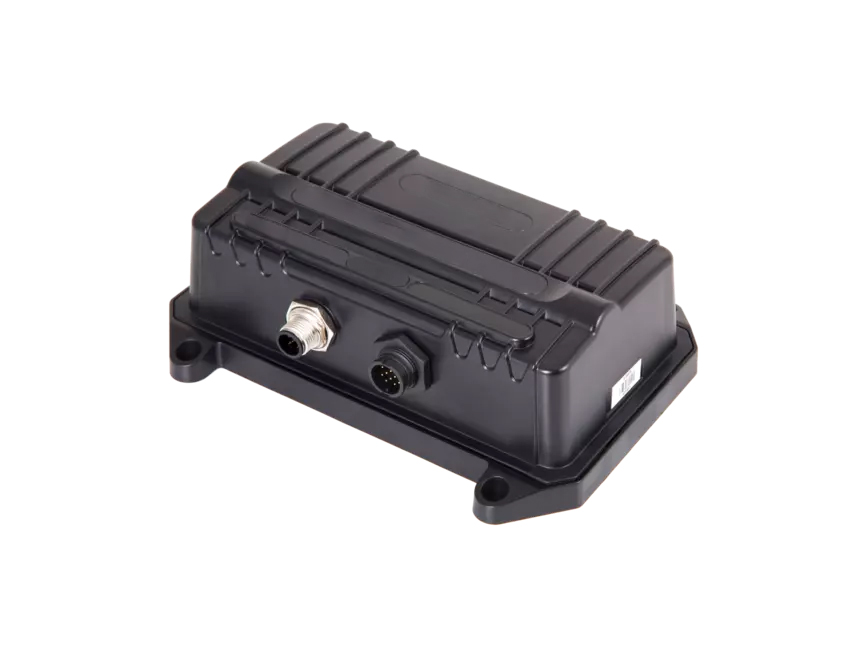
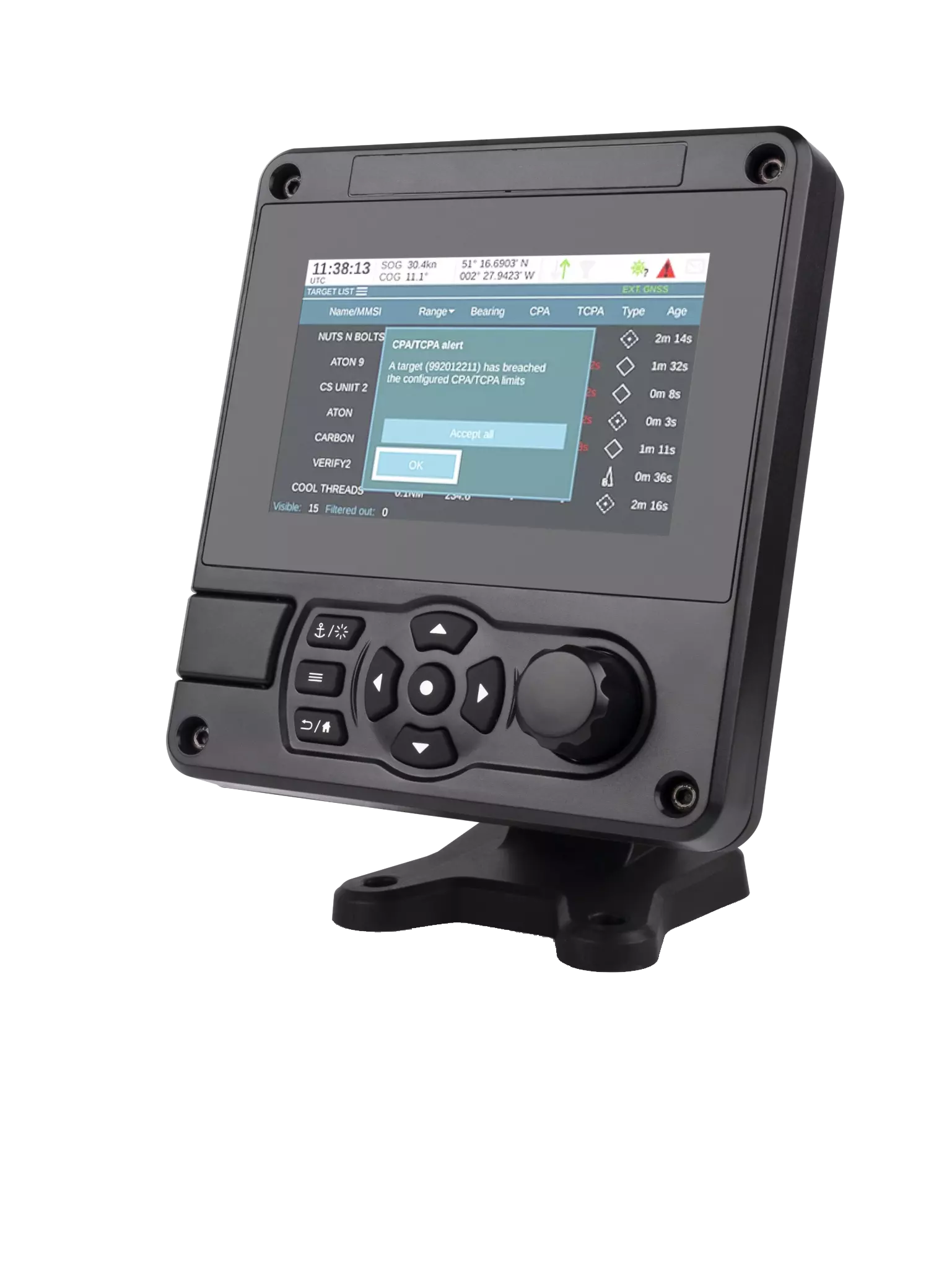
Automatic Identification System (AIS)

The Automatic Identification System (AIS) utilizes VHF radio waves over short distances and enables ships and coastal stations sharing and acquiring key data, such as vessel identity, position, course, and speed.

AIS boosts maritime safety and environmental protection by increasing situational awareness and preventing collisions and functioning as a digital tracking system for both commercial and passenger ships.
Operation principle

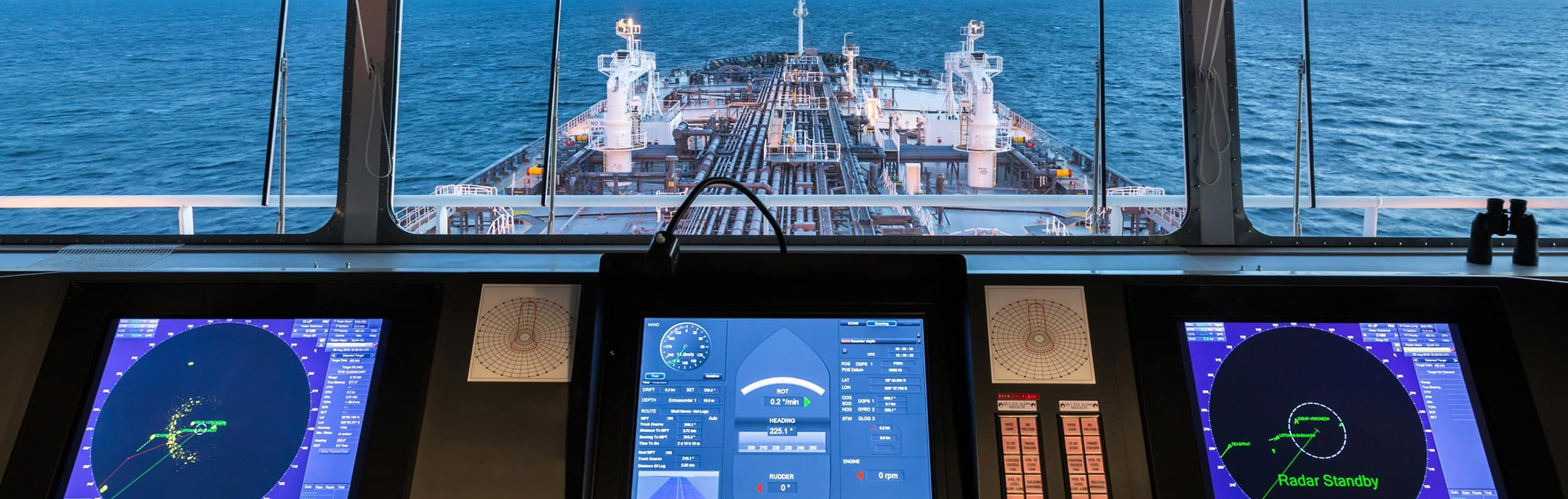
Vessels equipped with transponders transmit various data using VHF frequencies, including information about the vessel, its speed, destination, estimated time of arrival and course over ground (COG). This information is available to anyone with an AIS receiver.

Technical specifications

AIS is a radio communication system used for small vessel tracking and identification.

Frequencies Range Data transmission
  • 161.975 MHz (channel 87B);
  • 162.025 MHz (channel 88B)
  • uses time division multiple access (TDMA) technology
  • depending on antenna height and radio power output
  • limited version operates within 10 nautical miles
  • broadcast mode (transmits data to all AIS-equipped vessels within operation range)
  • addressed mode (transmits data to a specific vessel or ground station)
Data essentianls Message types Data integrity
  • vessel identification
  • vessel position,
  • speed
  • course
  • heading
  • navigational status
  • information about other vessels in the vicinity
    (name, position, course, and speed)
  • position reports
  • static and route-related data
  • ssafety-related messagess
  • other message types
  • ensured by a checksum mechanism
  • verification of each set of data
Power source Compliance Interoperability
  • requires continuous power supply for extended periods (battery or generator)

  • International Maritime Organization (IMO) AIS standard
  • International Electrotechnical Commission (IEC) AIS standard
  • compatible with other AIS systems and communication systems, such as radar and VHF radio
  • receives and transmits data from and to other vessels and shore stations